
Resource Therapy is rooted in psychoanalysis, a psychotherapy theory and technique developed by Sigmund Freud (1856 – 1939), which focuses on exploring the connection between the processing of past experiences in the subconscious mind and a person’s present-day responses to thoughts, feelings and behavior.
In psychoanalytic theory, Freud mapped the structure of the conscious mind and the subconscious mind further into three parts, namely: “ego”, “id” and “superego”.
Freud’s psychoanalytic model explains that the thoughts, feelings, and behaviors a person experiences in the present are the result of the interaction of three parts: the id, ego, and superego. Austrian psychologist Paul Federn (1871-1950) held a different view.
In Federn’s view, the psychic structure is not simply divided into three major parts, as Freud formulated, but rather into more specific parts, manifested as states of our being. According to Federn, in our daily lives, we continually experience shifting states from moment to moment as we respond to external situations. In each state, there is an active “ego” that represents our interests in responding to the situation we experience.
Federn began to formulate the concept of “Parts” within the self, which he called “Ego States”.
The concept of Ego State that Federn formulated was then passed on to his student from Italy, namely Edoardo Weiss (1889 – 1970).
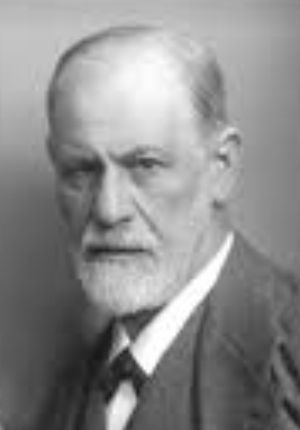
Sigmund Freud
(picture source: Wikipedia)
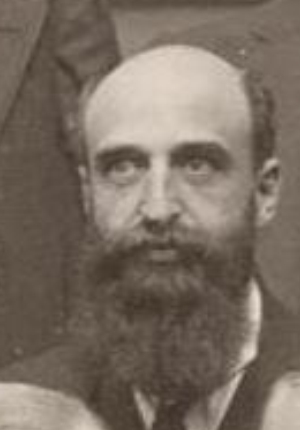
Paul Federn
(picture source: Wikipedia)
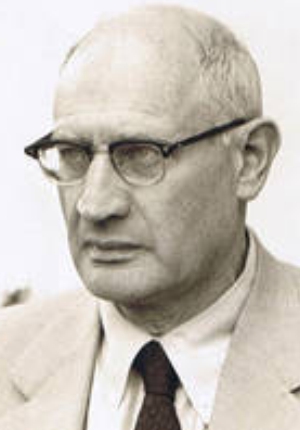
Edoardo Weiss
(picture source: Wikipedia)
However, up to that point, the existence of the Ego State itself was still more of a concept and theory, not yet manifested as a specific therapy technique, until Weiss passed this concept on to John G. Watkins (1917 – 2012), an American psychologist.
John Watkins, together with his wife, Helen Watkins (1921 – 2022) began to develop the concept of Ego State that they studied into a therapy technique called Ego State Therapy.
In Ego State Therapy, the therapy process begins by focusing on identifying specific parts underlying a person’s problems. The therapy process then focuses on addressing these “problematic” parts. The Watkins’ practice and research revealed that when previously problematic parts are freed from their problems, the symptoms of the problem also subside.
The emergence of Ego State Therapy began to attract the attention of several groups interested in exploring the therapeutic process of parts within the human self, one of whom was Gordon Emmerson (1950-present), an American psychologist living in Australia.
Gordon Emmerson studied Ego State Therapy with Watkins, practicing it, researching it, and developing it further. Along the way, Emmerson formulated several findings that distinguished his theory and practice of Ego State Therapy from those of the time.
Initially, the practice of Ego State Therapy required the use of a formal hypnotic state to access and communicate with Parts. This is where Emmerson developed specific techniques that allow access and communication with Parts without the use of formal hypnosis, making his Ego State Therapy practice applicable in conventional counseling sessions.
As his practice progressed, Emmerson began to formulate various practical steps and theoretical foundations that differentiate his therapy from traditional Ego State Therapy.
In 2014, Emmerson officially formulated “Resource Therapy” as a stand-alone therapy modality.
The birth of Resource Therapy was not just a “name change” from what was originally Ego State Therapy.
The word “Resource” that accompanies Resource Therapy has its own philosophy, which then underlies various treatment strategies in therapy sessions.
As a stand-alone therapy technique, Resource Therapy has formulated its own theoretical basis that explains the dynamics of human personality formation, called “Resource Personality Theory.” It also has its own diagnostic tools for the problems a person experiences, called “Resource State Diagnosis.”
Based on this personality theory and diagnostic tools, Resource Therapy has formulated treatment strategies summarized in the four-step “Resource Therapy Process” and fifteen treatment actions called “Resource Therapy Actions.”


